Birthstones and Their Meanings: The Ultimate Guide to Jewelry Gifting
In the vast, glittering world of fine jewelry, few items possess the personal resonance of a birthstone. Unlike a generic diamond stud or a plain gold chain, a birthstone piece tells a story. It whispers of the exact moment a person entered the world, linking them to ancient traditions, celestial movements, and timeless symbolism.
Whether you are shopping for a significant other, a family member, or perhaps even yourself, understanding birthstones is the first step toward mastering the art of meaningful gift-giving. This guide will walk you through the history, the symbolic meanings behind each gem, and how to select the perfect piece that will be cherished for a lifetime.
A Brief History: From Ancient Breastplates to Modern Calendars
The concept of assigning specific gemstones to birth months is not merely a modern marketing invention; it is a tradition with roots stretching back thousands of years.
The Biblical Connection
Most historians trace the origins of birthstones to the Breastplate of Aaron, described in the Book of Exodus. The breastplate was a religious garment adorned with twelve unique gemstones, each representing one of the twelve tribes of Israel. While these stones did not originally correspond to the months of the year, the association between gems, spiritual protection, and identity began to solidify.
The Zodiac and the Stars
In the first century AD, scholars began connecting the twelve stones of the breastplate to the twelve signs of the Zodiac. It was believed that each gemstone possessed a specific celestial vibration. Wearing the stone associated with the current astrological sign was thought to amplify one’s strengths and provide protection. For centuries, people would often own a collection of all twelve stones, rotating them monthly to align with the stars.
The Modern Standardization
The list we recognize today was standardized in 1912 by the National Association of Jewelers (now Jewelers of America). This organization sought to simplify the tradition for the modern consumer, resulting in the fixed monthly list that dominates the market today. While some months have gained additional options over the years—often to make gems more accessible or durable—the core tradition remains a beautiful bridge between history and personal identity.
The Birthstone Guide: Month by Month
Choosing a gift becomes infinitely easier when you understand the personality and significance associated with each stone. Below is your master reference for the birthstones and their deeper meanings.
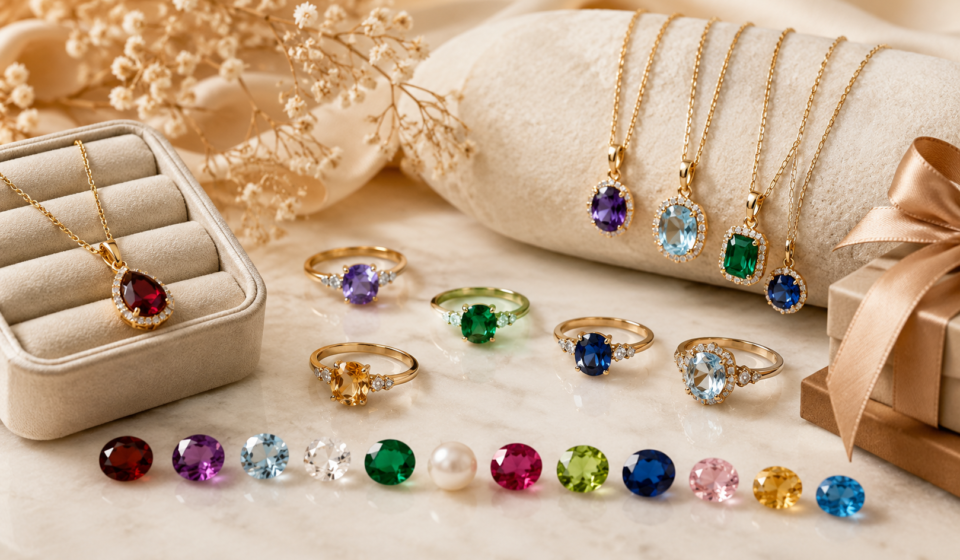
| Month | Birthstone | Primary Symbolism |
| January | Garnet | Trust, Loyalty, Friendship |
| February | Amethyst | Wisdom, Serenity, Clarity |
| March | Aquamarine | Youth, Health, Hope |
| April | Diamond | Everlasting Love, Strength |
| May | Emerald | Rebirth, Prosperity, Fertility |
| June | Pearl / Alexandrite | Purity, Balance, Fortune |
| July | Ruby | Passion, Energy, Vitality |
| August | Peridot / Spinel | Protection, Success, Strength |
| September | Sapphire | Truth, Nobility, Wisdom |
| October | Opal / Tourmaline | Hope, Creativity, Innocence |
| November | Topaz / Citrine | Healing, Joy, Abundance |
| December | Turquoise / Tanzanite / Zircon | Luck, Success, Tranquility |
January: The Garnet
Deep red and rich in history, the garnet is said to guide the wearer through the darkness. It represents loyalty and friendship, making it an excellent gift for a best friend or a life partner who has been your “rock.”
February: The Amethyst
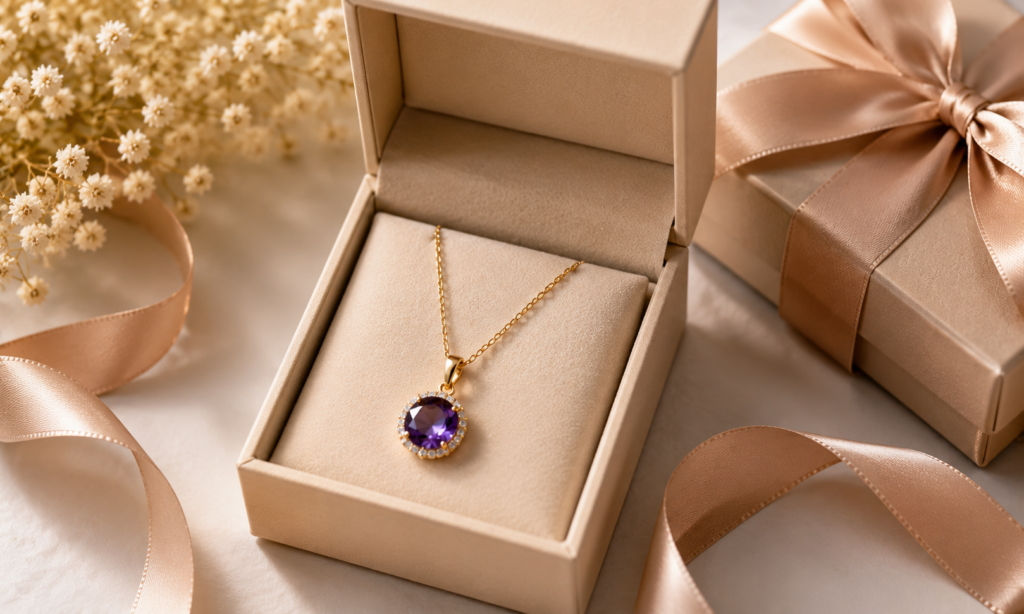
This violet gem has long been associated with clear-headedness and wisdom. Legend suggests it prevents intoxication, but in modern terms, it is prized for its calming energy. It’s a perfect gift for the stressed professional or the deep thinker in your life.
March: The Aquamarine
True to its name, the aquamarine captures the color of the sea. It is a symbol of youth and vitality. It is often given to encourage a sense of calm and to bless the wearer with a clear, happy life.
April: The Diamond
The undisputed king of gemstones. The diamond represents unbreakable love and invincibility. While often associated with engagement, a diamond birthstone gift is the ultimate gesture of “I value you above all else.”
May: The Emerald
A vibrant, lush green stone, the emerald signifies rebirth and love. Historically, it was associated with Venus, the goddess of love. It is a beautiful choice for someone starting a new chapter in their life, such as a career move or a new home.
June: Pearl or Alexandrite
June is unique for having multiple options. Pearls represent purity and humility—a classic, elegant choice. Alexandrite, however, is a color-changing gem symbolizing balance and good fortune. Pearls are traditional, while Alexandrite is for the person who loves the unique and rare.
July: The Ruby
The ruby is the gem of passion and fire. It is often believed to bring energy and vitality to the wearer. A ruby gift is a bold statement, ideal for someone with a vibrant, outgoing, and energetic personality.
August: Peridot or Spinel
Peridot is a bright, lime-green gem believed to ward off nightmares and bring peace. Spinel, often mistaken for ruby, represents revitalizing energy. These are excellent choices for someone who brings light and positivity into the world.
September: The Sapphire
Traditionally associated with royalty and divinity, the sapphire represents wisdom and truth. It is a deeply grounding stone, making it a perfect gift for someone you deeply respect and trust.
October: Opal or Tourmaline
Opals are famous for their “play of color,” making each stone entirely unique. They represent hope and creativity. Tourmaline, available in every color of the rainbow, adds an extra layer of personal choice—choose the color that best fits the recipient’s style.
November: Topaz or Citrine
These stones are the gems of warmth. Citrine, the “merchant’s stone,” is associated with abundance and joy. Topaz represents healing. Both are perfect for a sun-drenched, optimistic soul.
December: Turquoise, Zircon, or Tanzanite
December babies have the most variety. Turquoise is an ancient protection stone. Zircon is known for its incredible brilliance. Tanzanite is a rare, violet-blue gem of success. These stones are perfect for someone who is adventurous and seeks the extraordinary.
The Psychology of Gifting: Why Birthstones Win
Why do birthstones make better gifts than generic jewelry? It comes down to psychology. When you gift a piece of jewelry featuring a birthstone, you are doing more than handing over a luxury item; you are engaging in symbolic communication.
1. The Personalization Factor
We live in an age of mass production. A generic necklace feels… well, generic. A birthstone piece, however, acknowledges the recipient’s individuality. It says, “I know when you were born, I know what your month stands for, and I chose this specifically for you.” It transforms a commodity into a keepsake.
2. The “Thinking of You” Anchor
Psychologists have noted that objects can act as “anchors” for memories. A birthstone is an emotional anchor. Every time the wearer catches a glimpse of the stone on their ring or necklace, they are reminded of the person who gave it to them and the occasion for which it was given. It is a gift that provides emotional ROI (Return on Investment) for years to come.
3. Versatility Across Relationships
Birthstones are uniquely versatile.
- For a Romantic Partner: Opt for a high-quality setting—a gold or platinum ring or pendant. It implies a long-term, precious commitment.
- For a Parent: Choose a classic design, perhaps a brooch or a pair of earrings. It focuses on the elegance and timelessness of their influence in your life.
- For a Milestone (18th/21st Birthday): A simple, delicate necklace is perfect. It marks the transition into adulthood with something that feels sophisticated yet youthful.
Practical Tips for Buying Birthstone Jewelry
Now that you have selected the right stone based on the birthday, how do you ensure you are buying a quality piece?
Understand the “Mohs” Scale
Not all gemstones are created equal in terms of durability. If you are buying a ring, which faces daily wear and tear, you need a hard stone.
- High Durability (Good for rings): Diamond, Sapphire, Ruby.
- Moderate Durability (Wear with care): Amethyst, Garnet, Aquamarine, Topaz.
- Fragile (Best for earrings or pendants): Pearl, Opal, Turquoise.
- Advice: If your recipient is a nurse, artist, or someone who uses their hands heavily, choose a harder stone for a ring, or opt for a necklace/earrings regardless of the stone’s hardness.
Quality Over Size
It is better to buy a smaller, high-quality, clear gemstone than a massive, cloudy, or treated one. Look for:
- Clarity: Is the stone clear to the eye?
- Color Consistency: Is the hue even throughout the gem?
- Certification: If you are spending a significant amount (especially on Diamonds or Rubies), ensure the piece comes with a certificate of authenticity from a reputable laboratory (like GIA).
The Setting Matters
A beautiful stone needs a worthy setting.
- Sterling Silver: Affordable, bright, great for casual, everyday wear.
- Gold (14k/18k): Timeless, durable, holds value.
- Rose Gold: Adds a romantic, modern, and feminine touch, which works exceptionally well with stones like Morganite, Garnet, and Opal.
Caring for Your Birthstone Jewelry
A gift should last a lifetime. Remind the recipient (or include a small note) on how to care for their stone.
- Avoid Chemicals: Never wear pearls or opals while applying hairspray, perfume, or lotion. These porous stones can be permanently damaged by chemicals.
- Storage: Store jewelry in individual pouches. Diamonds can scratch other stones, so keep your diamond rings separate from your soft amethyst or opal pieces.
- Professional Cleaning: Once a year, take the piece to a professional jeweler. They can check the prongs (to ensure the stone won’t fall out) and give it a deep, safe clean.
Conclusion: The Timeless Gesture
There is something inherently romantic about birthstones. They remind us that we are part of a larger story—that our birth date is a fixed point in the celestial calendar, and that our lives are precious gems in their own right.
When you gift a birthstone, you are giving a piece of earth’s history, styled to celebrate a person’s unique timeline. It is thoughtful, it is traditional, and it is deeply personal. Whether you opt for a modest, minimalist design or a show-stopping statement piece, the meaning behind the stone will ensure that your gift is not just another item in a jewelry box, but a treasured memento of your affection.
Next time you find yourself browsing for a gift, look past the trends. Look at the calendar, look at the stars, and find the stone that tells their story.