
Experience Gifts vs. Material Gifts: Why Memories Last Longer Than Things
We have all been there. The holiday season is fast approaching, a major milestone birthday is on the calendar, or a close colleague is celebrating a massive promotion. You spend hours walking through crowded shopping malls or scrolling endlessly through digital storefronts, looking for that one physical object that screams perfection. You want something shiny, something substantial, something that looks expensive when wrapped in heavy paper and tied with a silk bow.
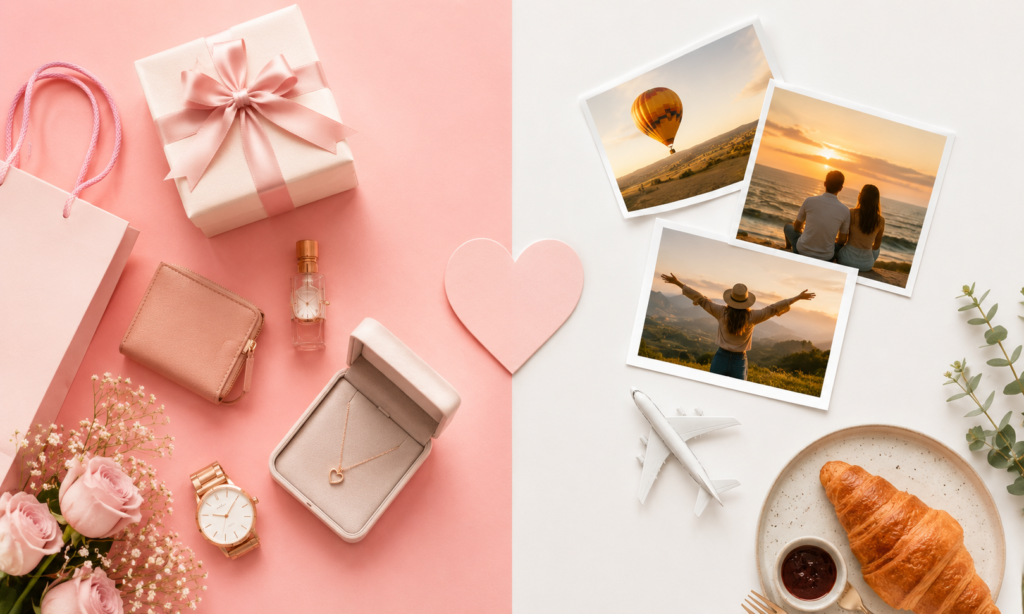
But if you look back at the best gifts you have ever received in your life, how many of them were physical objects?
Having spent over eight years as a professional event planner and luxury gift curator, I have watched thousands of gift exchanges unfold. Early in my career, I operated under the assumption that a great gift had to be tangible. I helped clients pick out high-end watches, designer tech organizers, and crystal decanters. But over time, a strange pattern emerged. A few months after the celebration, those expensive physical objects would inevitably blend into the background of everyday life, sitting on a shelf or shoved into a desk drawer.
The gifts that people were still talking about years later? They were almost always experiences.
In a world drowning in physical clutter, the shift toward experiential gifting is not just a passing trend—it is a fundamental restructuring of how we connect with the people we care about. Let’s dive into the fascinating psychological science behind why experience gifts outperform material items, and how you can use this knowledge to become an unforgettable gift-giver.
1. The Science of Happiness: Why Our Brains Prefer Memories
To understand why material gifts lose their luster so quickly, we have to look at a psychological phenomenon known as hedonic adaptation.
Coined by psychologists, hedonic adaptation is the observed tendency of humans to quickly return to a relatively stable level of happiness despite major positive or negative events. When you buy or receive a brand-new smartphone, a luxury handbag, or the latest tech gadget, you experience an immediate spike in dopamine. It feels incredible. But within a few weeks, or even days, that new item becomes a normal part of your everyday environment. The novelty wears off, the excitement fades, and the object simply becomes another “thing” you own.
Dr. Thomas Gilovich, a psychology professor at Cornell University who has studied the relationship between spending and happiness for decades, discovered that experiences provide a much more durable return on emotional investment.
Unlike physical objects, experiences do not sit in your living room slowly degrading, breaking, or becoming outdated. Instead, they undergo a psychological process called experiential reinterpretation. As time passes, our memories of experiences actually get better, sweeter, and more vivid. Even a minor mishap during a trip or an activity becomes a funny story we tell for years.
Furthermore, experiences are highly resistant to social comparison. If you buy a luxury watch, your happiness can easily be diminished if a friend buys a watch that is twice as expensive. But if you go on a unique backpacking trip through a national park or take a specialized cooking class, that experience belongs entirely to you. It is incomparable, unique, and deeply tied to your personal identity.
2. Real-Life Experience: The Designer Briefcase vs. The Backyard Observatory
To see this psychological theory play out in the real world, look no further than a major workplace milestone I helped manage a few years ago.
I was working alongside a senior operations director named Tom. Tom was retiring after a stellar 20-year career with his company. He was a corporate titan—always immaculate, incredibly organized, and notoriously difficult to shop for because if he wanted something, he bought it for himself instantly.
The management team originally wanted to buy him a classic, high-end Italian leather briefcase worth nearly $800 to honor his retirement. It was the safe, traditional corporate choice. It looked beautiful, it was expensive, and it fit the corporate mold perfectly.
Knowing Tom’s secret passion for amateur astronomy, I stepped in and pitched an alternative experiential gift: a private, overnight VIP stargazing excursion at a remote mountain observatory, guided by a professional astrophysicist, complete with a luxury cabin stay for him and his wife.
The team was skeptical. They worried that without a heavy physical box to unwrap in front of the entire office, the gesture would feel fleeting and insubstantial. But they trusted my experience and agreed to split the difference: we bought a small, elegant $50 brass compass as a physical keepsake, but the true gift was the voucher for the observatory experience.
The day of the retirement party arrived. Tom unwrapped the small box, saw the compass, and read the itinerary for the private observatory night. For the first time in 20 years, the office watched this stoic corporate director tear up.
Three years after that party, I ran into Tom at a charity event. Do you know what he talked about? He didn’t mention the brass compass once, and he certainly wouldn’t have been talking about a leather briefcase. Instead, his eyes lit up as he described the exact moment he looked through a research-grade telescope and saw the rings of Saturn with his own eyes.
“Lily, that night changed how I look at the sky,” he told me. “My wife and I still talk about it every time we sit out on our deck at night.”
That is the power of experiential gifting. An $800 leather briefcase would have eventually scuffed, aged, and ended up in a closet. An $800 memory became a permanent, identity-shaping pillar of his retirement.
3. The Experience Gifting Matrix: Material vs. Experiential
If you are trying to decide which direction to take for your next gift exchange, it helps to look at how these two categories stack up across various psychological and practical metrics.
| Evaluation Metric | Material Gifts | Experience Gifts |
| Immediate Dopamine Spike | High (The physical unwrapping provides instant gratification). | Medium (The initial reveal is exciting, but the peak occurs later). |
| Long-Term Emotional Value | Low (Decays rapidly due to hedonic adaptation). | Extremely High (Improves over time through memory and storytelling). |
| Clutter Index | High (Contributes directly to physical storage issues in the home). | Absolute Zero (Leaves no physical footprint behind). |
| Relationship Impact | Transactional (Focuses on the monetary value of the object). | Relational (Builds shared identity, inside jokes, and deep bonds). |
| Anticipation Value | Low to None (The item is used immediately upon opening). | High (The weeks leading up to the event provide a massive happiness boost). |
4. The Hidden Superpower: The Value of Anticipation
One of the most overlooked aspects of experiential gifting is the concept of anticipatory utility.
When you give someone a physical item, the excitement peaks the moment they open it, and it is downhill from there. But when you give someone an experience—such as concert tickets scheduled for three months from now—you are gifting them months of pure, scientifically proven anticipation happiness.
Studies in behavioral economics show that the period of looking forward to an event is often just as enjoyable, if not more enjoyable, than the event itself. Your recipient gets to research the venue, plan their outfit, count down the days, and talk about it with their friends. You are essentially extending the lifespan of your gift from a single afternoon to a multi-month celebration.
5. How to Wrap an Experience: Overcoming the “Empty Box” Problem
The single biggest reason people avoid experience gifts is practical: they miss the theater of unwrapping. Handing someone a plain white envelope containing a printed piece of paper can feel a bit anti-climactic at a bustling birthday party or holiday gathering.
To solve this, you need to turn the reveal into a physical proxy for the experience. Here is my proven, step-by-step protocol for wrapping an experience gift so it carries the same visual punch as a luxury material item:
1.Find a Symbolic Object:
Select a thematic physical anchor.
Never give just a piece of paper. Find a small, inexpensive, but high-quality physical item that hints at the experience. If you are gifting a cooking class, buy a beautiful wooden spoon or an artisan apron. If you are gifting a weekend getaway, buy a premium luggage tag.
2.Ditch the Plain Printer Paper:
Print a visually striking itinerary.
Do not print a basic confirmation email on standard office paper. Use a graphic design tool to create a custom, high-quality “ticket” or itinerary. Print it on heavy, textured cardstock or linen paper to give it a premium, tactile weight.
3.Create a Box-Within-A-Box:
Build suspense through packaging layers.
Place your symbolic object and the custom ticket inside a high-quality box. Use tissue paper, natural twine, or fabric ribbons to create a traditional unwrapping experience. The goal is to keep the recipient guessing until the very last layer.
4.Write a Future-Focused Note:
Deliver the emotional context.
Include a handwritten card that focuses entirely on the emotional journey ahead. Write about why you chose this specific activity for them and how much you look forward to hearing about it (or sharing it with them).
6. Curated Experience Ideas for Every Budget
Experiential gifts do not require a massive bank account. Here is a quick reference list of highly impactful experiences scaled across different price points:
- Low Budget (Under $30): A curated digital playlist paired with a promise of a scenic drive, a custom map of a self-guided historic walking tour in their city, or a pass to a local botanical garden.
- Medium Budget ($50 – $150): An annual National Parks Pass, a specialized local workshop (such as pottery throwing, coffee roasting, or stained glass making), or tickets to an indie theater production.
- High Budget ($200+): A weekend cabin rental, a hot air balloon flight, a premium tasting menu at a Michelin-starred restaurant, or a seasonal subscription to a local performing arts center.
Conclusion
At the end of the day, our lives are not defined by the physical inventory we accumulate. We are the sum total of our experiences, the places we have been, the things we have learned, and the people we have laughed with. When you choose to gift an experience, you are making a conscious decision to invest in someone’s long-term happiness rather than their short-term novelty.
The next time you find yourself stressed out in a store aisle, staring at rows of mass-produced plastic, leather, and metal, take a step back. Think about the person you love. Skip the clutter, forget the things, and give them a memory that will sit safely in their heart for the rest of their life.